Solutions

Munters Air Treatment Solutions by Application

Every facility has unique air quality challenges. We match the right air treatment technology to your specific application, operating conditions, and regulatory requirements.

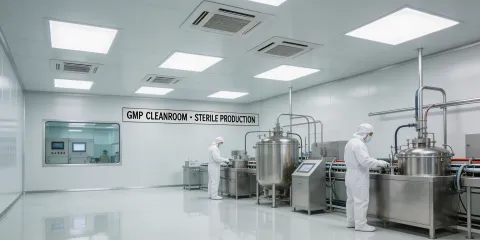
Pharmaceutical air treatment

Pharmaceutical & Life Sciences

Precision humidity control for GMP cleanrooms, tablet coating lines, API storage, and packaging areas. Our desiccant dehumidifiers maintain target conditions of 25-35% RH with ±2% accuracy, while HEPA-filtered AHUs ensure ISO Class 5-8 particle counts.

  • Desiccant rotor dehumidification to < 1 g/kg moisture content
  • Energy recovery wheels reducing fresh air energy penalty by 30%
  • FDA 21 CFR Part 11 compatible data logging
Discuss Your Pharma Project
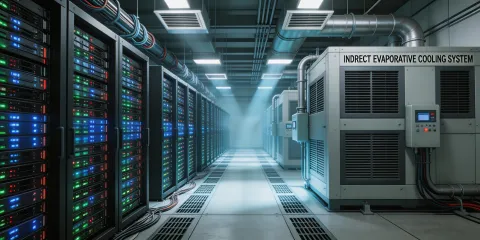
Data center cooling

Data Center Cooling

Indirect evaporative cooling systems that reduce data center PUE to below 1.3 while maintaining ASHRAE-recommended temperature and humidity envelopes. Designed for Tier III/IV reliability with N+1 redundancy configurations.

  • Indirect evaporative cooling achieving 38% energy savings vs. DX
  • Supply air temperature control within ±0.5°C
  • BMS integration via BACnet/IP and Modbus TCP
Discuss Your Data Center Project
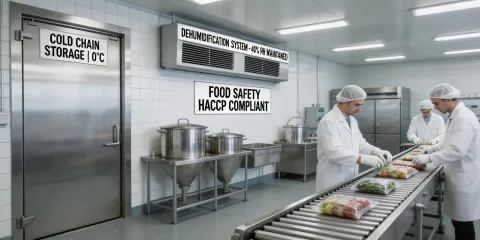
Food processing air treatment

Food & Beverage Processing

Dehumidification and air treatment solutions that prevent condensation, control microbial growth, and maintain HACCP-compliant environments in processing, packaging, and cold storage areas.

  • Condensation prevention in cold storage entry zones
  • Stainless steel and food-grade material construction
  • Integrated temperature/humidity monitoring with alarm outputs
Discuss Your Food Processing Project
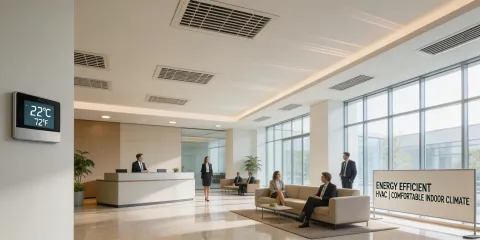
Commercial building HVAC

Commercial Buildings

Energy-efficient air handling units and ventilation systems for offices, hotels, hospitals, and retail environments. Our AHUs combine heating, cooling, filtration, and humidity control in a single optimized package.

  • EC fan technology with variable airflow control
  • Enthalpy recovery wheels reclaiming up to 80% of exhaust energy
  • Modular configurations fitting standard plant room dimensions
Discuss Your Building Project

Key Technical Parameters Across Product Lines

Product Line Capacity Range Key Performance Metric Certifications
Desiccant Dehumidifiers 500 - 45,000 m³/h airflow Moisture removal: 0.5 - 120 kg/h; target dewpoint: -40°C to +10°C Eurovent, CE, UL
Air Handling Units 1,000 - 120,000 m³/h airflow Heat recovery efficiency: up to 82% (rotary); filter class: G4 to H14 Eurovent, CE, UL, ISO 9001
Indirect Evaporative Coolers 50 - 1,500 kW cooling Wet-bulb effectiveness: 90-115%; PUE contribution: < 1.10 at design conditions CE, ASHRAE 90.1 compliant
Air Dryers 10 - 5,000 Nm³/h Pressure dewpoint: -20°C to -70°C; pressure drop: < 0.3 bar CE, ISO 8573-1

All specifications represent standard product ranges. Custom configurations available for requirements outside these ranges. Contact our engineering team for project-specific datasheets.

How to Choose the Right Air Treatment System

Not sure which technology suits your application? Follow these steps or contact our engineers for a personalized recommendation.

1

Define Your Target Conditions

Identify required temperature range, relative humidity target, air quality class (ISO/ASHRAE), and airflow volume for your application space.

2

Assess Your Ambient Conditions

Consider local climate data, building envelope characteristics, internal heat and moisture loads, and seasonal variation to determine the design load.

3

Select the Technology

Desiccant dehumidification for deep drying below 40% RH. Evaporative cooling for energy-efficient sensible cooling. Standard AHUs for general ventilation and comfort conditioning.

4

Get an Engineering Review

Submit your requirements to our application engineers for a free system sizing, energy analysis, and quotation tailored to your project.

How We Help You Validate Performance

Factory Acceptance Testing (FAT)

For custom AHU and dehumidifier orders, we offer witnessed factory acceptance testing at our manufacturing facilities. Tests include airflow measurement (per EN 1886), sound power level testing (per ISO 3744), heat recovery efficiency verification, and filter leakage testing (per EN 1886 Class F9). Test reports are provided with each unit.

On-Site Performance Verification

After commissioning, our engineers perform on-site measurements to verify that installed performance matches design specifications. Measurements include supply and return air psychrometric conditions, fan power consumption, static pressure profiles, and BMS data point verification. Results are documented in a commissioning report signed by our field engineer.

Free Sample Testing Program

For evaporative cooling media and desiccant rotor replacements, we provide sample materials for independent laboratory testing. Clients can verify wettability, saturation efficiency, and structural integrity before committing to a full order.

Application Engineer Consultation

Before purchasing, you can schedule a free consultation with a Munters application engineer who will review your facility conditions, model expected system performance using psychrometric simulation tools, and provide a written performance guarantee for the selected equipment configuration.

What Our Systems Can and Cannot Do

Every air treatment technology has performance boundaries. Understanding these upfront helps you make the right investment decision.

Evaporative Cooling: Climate Dependency

Indirect evaporative cooling performance is directly tied to outdoor wet-bulb temperature. In hot-humid climates (wet-bulb above 24°C), evaporative systems cannot achieve the same temperature reduction as mechanical refrigeration. Facilities in ASHRAE Climate Zones 1A-2A may require hybrid configurations combining evaporative pre-cooling with supplemental DX stages to meet year-round cooling demands.

Desiccant Dehumidifiers: Reactivation Energy

Desiccant rotor dehumidifiers require thermal energy for reactivation, typically consuming 3-5 kW of heat per kg of moisture removed. Without waste heat recovery or gas-fired reactivation, operating costs can exceed those of refrigerant-based systems at moderate humidity targets (above 45% RH). We recommend desiccant systems primarily for applications requiring dewpoints below 10°C or operating in sub-zero ambient conditions where refrigerant coils frost.

Custom AHU Lead Times

Standard AHU configurations ship within 6-8 weeks, but units requiring specialized coatings (e.g., phenolic-coated coils for coastal or chemical environments), non-standard materials, or complex BMS integration may require 10-14 weeks. Projects with tight commissioning deadlines should engage our engineering team during the design phase to lock in production slots.

Service Coverage Boundaries

While Munters maintains 15 service centers across 45+ countries, emergency response times under 24 hours apply only within designated service zones (typically within 200 km of a service center). Remote or offshore installations may experience longer mobilization times; for such sites, we recommend maintaining a critical spare parts inventory on-site.

Need Help Choosing the Right Solution?

Our application engineers have helped thousands of facilities select the right air treatment system for their specific conditions. Let us do the same for you.

Talk to an Engineer