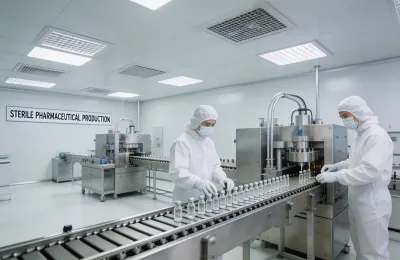
Pharmaceutical and biotech manufacturing demands ultra-precise humidity and temperature control for GMP compliance. Desiccant dehumidifiers in this sector must achieve target conditions as low as 1% RH for hygroscopic powder handling, while air handling units with HEPA filtration maintain ISO Class 5-8 cleanroom standards per EU GMP Annex 1 requirements.
Key applications: Tablet coating, capsule filling, API drying, lyophilization rooms, packaging, and stability storage. Equipment designed with FDA 21 CFR Part 11 compatible monitoring and full validation documentation (IQ/OQ/PQ).

Data center cooling typically accounts for 30-40% of total facility power consumption. Our indirect evaporative cooling systems can reduce cooling energy consumption by up to 38% compared to traditional DX systems, helping facilities achieve PUE targets below 1.3.
Key applications: Server hall cooling, UPS room dehumidification, containerized edge data centers, and telecom equipment shelters. N+1 and 2N redundancy configurations available for Tier III and IV facilities.
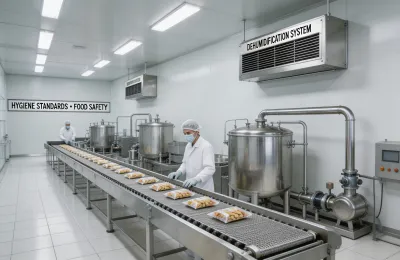
Uncontrolled humidity in food processing environments leads to condensation, microbial growth, product clumping, and packaging failures. Our dehumidification systems prevent these issues while maintaining HACCP-compliant conditions throughout production, packaging, and storage zones.
Key applications: Chocolate and confectionery production, cheese aging rooms, cold storage entry zones, sugar handling, meat processing, and beverage bottling. All equipment available in food-grade stainless steel construction.
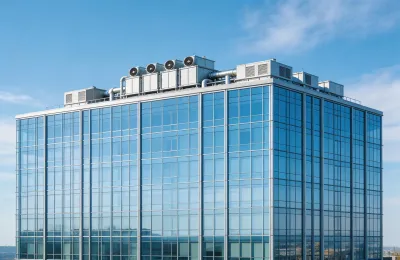
Commercial buildings require efficient air handling systems that balance indoor air quality, occupant comfort, and energy costs. Our modular AHUs integrate heating, cooling, filtration, and humidity control in configurations optimized for offices, hospitals, hotels, schools, and retail spaces.
Key applications: Central AHU systems, rooftop units, lobby and atrium ventilation, operating room air handling, and hotel guest room fan coil systems. Energy recovery options can reclaim up to 80% of exhaust air energy.
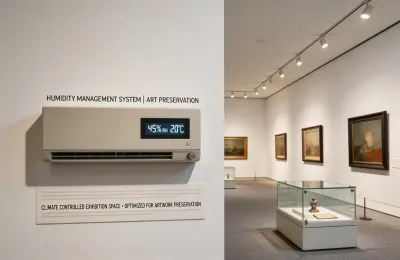
Cultural heritage preservation requires extremely stable temperature and humidity conditions, typically 50% ±3% RH at 20-22°C per ASHRAE Chapter 24 (Museums, Galleries, Archives, and Libraries) guidelines. Precision dehumidification systems maintain these tight tolerances year-round, protecting paintings, textiles, paper, and artifacts from moisture-related degradation including foxing, warping, and mold growth.
Key applications: Exhibition galleries, archival storage vaults, rare book rooms, photographic collections, and archaeological artifact repositories. Ultra-low noise operation essential for visitor experience.
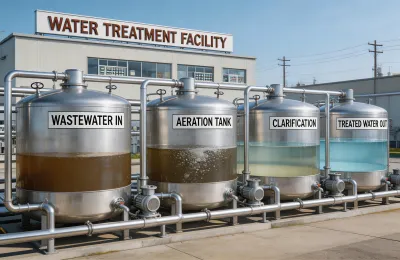
Water and wastewater treatment facilities expose air handling equipment to highly corrosive atmospheres containing hydrogen sulfide (H2S concentrations often exceeding 50 ppm), chlorine gas, and ammonia. Standard galvanized steel housings corrode within 2-3 years in these environments. Munters addresses this with phenolic-coated aluminum coils, 316L stainless steel drain pans, and epoxy-coated cabinet panels rated for C5 corrosivity per ISO 12944.
Key applications: Pump station ventilation, odor control air handling, sludge hall dehumidification, chemical dosing room ventilation, and covered tank exhaust systems. All units available with explosion-proof motors and ATEX-compliant electrical components for Zone 1/Zone 2 classified areas.